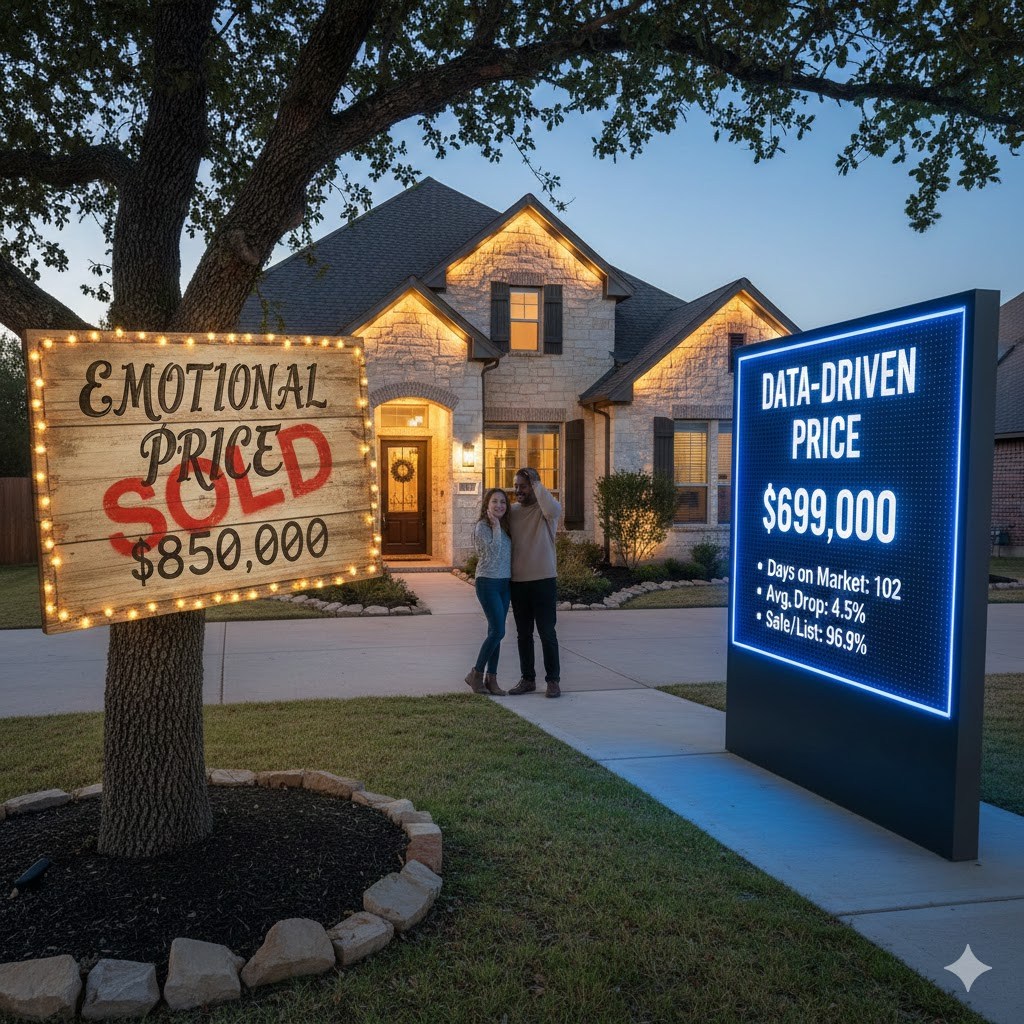
Here’s the reality most sellers don’t want to hear: the New Braunfels real estate market is no longer forgiving. Homes are taking an average of 103 days to go pending and 133 days to sell completely, based on recent November data. That’s a major shift from the fast-paced market many homeowners became used to over the last few years.
This change signals one thing clearly—we are operating in a buyer’s market. Buyers have options, leverage, and time. Sellers who fail to adjust their strategy are watching their listings sit, price reductions stack up, and negotiating power evaporate.
But here’s the good news: homes are still selling—and selling well—when the strategy is right.
I’m Cody Posey, and my role in this market isn’t to sugarcoat conditions or chase unrealistic pricing. It’s to position homes to sell efficiently, protect equity, and avoid stagnation, even when conditions are working against sellers. That requires discipline, data, and a willingness to let go of strategies that no longer work.
Let’s break down exactly how you do that.
Understanding the Shifting Sands of the New Braunfels Real Estate Market
The San Antonio–New Braunfels metro has experienced a steady rise in inventory. More listings mean more competition, and more competition means buyers no longer feel pressure to rush or overpay.
Today’s buyers are:
- Touring multiple homes before making a decision
- Comparing concessions and incentives
- Negotiating aggressively
- Willing to walk away and wait
This is not a reflection of a weak market—it’s a reflection of a normalized market after years of extreme imbalance.
The problem is that many sellers are still anchored to 2021–2023 pricing psychology. They remember what their neighbor sold for two years ago. They remember instant offers and waived contingencies. They expect the market to reward patience.
It won’t.
The biggest mistake sellers are making right now is assuming time will fix a bad strategy. In reality, time works against overpriced or poorly positioned homes. The longer a listing sits, the more buyers assume something is wrong—even when nothing is.
Winning in this environment requires acknowledging one uncomfortable truth: buyers are in control, and your job as a seller is to give them a reason to choose your home over dozens of alternatives.
That starts with pricing.
The Power of Precision Pricing: Winning Before the First Showing
Pricing is not a guess. It’s not a hope. And it’s definitely not an emotional decision.
Effective pricing today is built on live market intelligence, not past sales from six months ago. We focus on what buyers are actively comparing your home against right now.
That means:
- Active listings—not sold ones
- Similar size, condition, and location
- Days on market trends
- Price reductions and failed listings
This is where many sellers go wrong. They price based on what should happen instead of what is happening.
Strategic Underpricing (Yes, It’s Intentional)
One of the most effective tools in a buyer’s market is strategic underpricing—pricing the home slightly below the strongest comparable listings.
We’re not talking about giving the home away. We’re talking about pricing 0.5% to 1.5% below market leaders.
In practical terms:
- In the $300,000 range: $5,000–$7,500
- In the $500,000 range: $7,500–$12,000
- In the $600,000 range: up to $15,000
This does three critical things:
- Creates urgency in a market lacking urgency
- Expands your buyer pool by capturing buyers just below price thresholds
- Drives showing volume, which is the lifeblood of offers
Buyers don’t negotiate against empty showing calendars. They negotiate when they feel competition.
The irony? Homes priced strategically often sell closer to list price—or higher—than homes priced “optimistically.”
Why Overpricing Fails Fast
Overpriced homes don’t get ignored immediately. They get tested—and when the test fails, the damage begins.
- Fewer showings in the first 14 days
- Price reductions that signal weakness
- Buyers waiting for “the next cut”
- Appraisal issues when offers finally come
By the time most sellers adjust pricing, they’ve already lost leverage.
Actionable takeaway: The goal isn’t to test the market. The goal is to command it.
Sweetening the Deal: Incentives That Actually Work
Incentives are no longer optional. They’re part of the decision-making framework for buyers.
But random incentives don’t work. Targeted incentives do.
High-Impact Incentives Buyers Respond To
- Closing Cost Credits: This directly addresses buyer cash constraints and often matters more than price.
- Rate Buydowns: Even small temporary buydowns can dramatically improve affordability perception.
- Home Warranties: Reduces fear, especially in resale homes competing with new construction.
- Appliance or System Upgrades: New HVAC components or appliances communicate care and value.
- Flexible Possession or Closing: Convenience is a powerful motivator.
The mistake sellers make is offering incentives reactively—after weeks on market. The right approach is to deploy incentives proactively as part of the launch strategy.
We align incentives with:
- Buyer demographics in your price range
- Competing listings and builder offers
- Seasonal demand shifts
Actionable takeaway: Incentives aren’t concessions. They’re leverage tools.
Continuous Monitoring: The Difference Between Sellers Who Win and Sellers Who Chase
Markets don’t reward passivity. They reward responsiveness.
Every week a home is listed, it produces data:
- Showing frequency
- Feedback patterns
- Online engagement
- Competing price changes
Ignoring that data is how listings die quietly.
What We Track Weekly
- Buyer objections mentioned repeatedly
- Comparable homes going under contract
- New inventory entering the market
- Interest rate movement affecting affordability
If the market shifts—even slightly—we adjust early. Not emotionally. Strategically.
Waiting 30–45 days to respond is how sellers end up chasing the market down instead of staying ahead of it.
Actionable takeaway: Speed of adjustment protects equity.
Staging for Success: Why Presentation Still Matters More Than Ever
In a crowded market, buyers compare homes online first. If your home doesn’t stand out digitally, it may never get shown physically.
Staging isn’t about perfection—it’s about clarity.
Buyers need to immediately understand:
- How the space functions
- How large rooms actually are
- How they would live there
Key staging priorities:
- Decluttering to improve visual flow
- Removing personal distractions
- Neutralizing bold paint choices
- Maximizing light and openness
- Creating strong curb appeal
A staged home doesn’t just look better—it reduces buyer hesitation, which shortens decision cycles.
Actionable takeaway: Buyers don’t fall in love with houses they can’t mentally move into.
Marketing That Matters: Exposure Without Strategy Is Noise
Putting a home on the MLS is not marketing. It’s the starting line.
Real marketing is intentional and targeted.
That includes:
- Professional photography and video that tell a story
- Online advertising aimed at active buyer segments
- Social media exposure that builds urgency
- Agent-to-agent communication to activate buyer pools
In today’s market, buyers are informed, analytical, and cautious. Marketing must meet them where they are and answer their concerns before they ask.
This isn’t about hype. It’s about reducing friction in the decision-making process.
Final Reality Check: Homes Sell When Strategy Replaces Hope
Homes don’t sit because the market is broken. They sit because the strategy is outdated.
Sellers who adapt—early and decisively—are still selling efficiently and protecting their equity. Sellers who wait for the market to “come back” are learning that time is no longer on their side.
If you want your New Braunfels home sold—not just listed—the path forward is clear:
- Price with precision
- Incentivize strategically
- Monitor relentlessly
- Adjust quickly