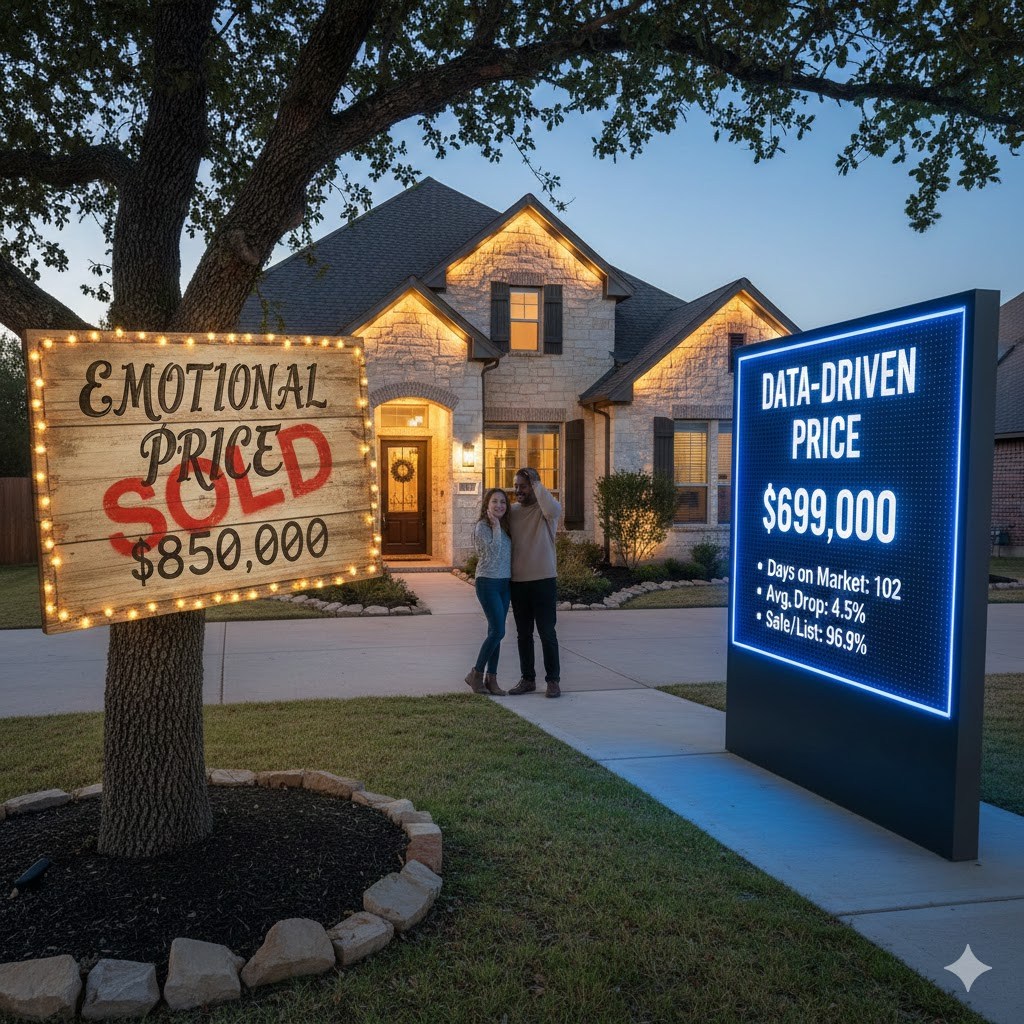
Should you price your New Braunfels home lower in 2026 to get it sold—or hold firm and wait for the right buyer?
Quick Answer
In 2026, most New Braunfels sellers win by pricing for today’s competition (not 2021 memories) and creating a clean, defensible value story from day one. If your home is even slightly above the best comparable options, buyers usually don’t negotiate—they move on—so your first pricing decision matters more than any later price cut. The goal is to attract serious showings in the first 7–14 days, then use feedback (and real comps) to adjust with intention, not panic. For expert updates on the New Braunfels and Hill Country real estate market, contact Cody Posey Real Estate — your dedicated specialist.
The Complete Picture
Selling in 2026 feels different in New Braunfels because buyers have more options, builders are aggressive with incentives, and affordability is a bigger part of the conversation than it was a couple years ago. That doesn’t mean you can’t sell for an excellent price—it means the strategy has to be precise.
I work this market every day, and here’s the truth: the “right list price” isn’t a guess. It’s a plan built from your true comp set, your current competition, and how your home presents compared to the other choices buyers can tour this weekend.
Context check: public market dashboards for New Braunfels in early 2026 show longer timelines and more negotiating room than the peak years (e.g., Redfin reported a January 2026 median sale price around $329K and ~104 days on market; Zillow’s ZHVI showed an average home value around $345,319 with ~87 days to pending; Realtor.com reported a January 2026 median home around $399K and ~77 median days on market).
Key Insights
Before we talk numbers, I want to slow this down for a second—because pricing isn’t just math, it’s also psychology. When buyers shop for New Braunfels real estate in 2026, they’re not only comparing homes; they’re comparing comfort, risk, and how safe it feels to make a big decision. Here are the key insights I walk sellers through so you can price with clarity and still protect your net.
-
Micro-market beats citywide stats
New Braunfels isn’t one market—it’s a collection of micro-markets that behave differently week to week. A home in Gruene can’t be priced like a home that’s farther out, and a mature neighborhood doesn’t compete the same way as a brand-new community with builder incentives. Buyers notice these differences immediately, even if they can’t articulate them in real estate terms. They’ll pay for what feels like the best “fit” for their lifestyle, but only if the price makes sense against the other options they can tour today. That’s why I focus on your true comp set first, then I layer in what’s active and what’s pending to keep your pricing grounded in reality.
-
Condition is emotional (and it shows up in the offer)
Condition isn’t just “updated or not”—it’s the feeling a buyer gets when they walk in the door. If the home feels cared for, clean, and easy to move into, buyers relax and start imagining their life there. If it feels like a project, their brain instantly starts calculating cost, time, and uncertainty—and that turns into lower offers or hesitation. In the New Braunfels housing market, little things like flooring consistency, lighting, fresh paint, and obvious maintenance items can change how your home compares against Hill Country homes down the street. Pricing has to reflect that experience, not just square footage. The goal is to make the buyer feel confident—and confidence sells.
-
The first 7–14 days are your best leverage
Your launch window is when your listing has the most attention, the most curiosity, and the highest chance of creating urgency. That early traffic is valuable because it tells you what the market really thinks, fast. If you price too high, you don’t just “wait longer”—you often miss the moment when buyers are most willing to act. Then the listing starts to feel stale, and buyers assume there’s a reason it hasn’t sold. In New Braunfels real estate, that can turn into price drops that feel painful—not because the home is bad, but because the strategy wasn’t aligned from day one. If we price to be competitive early, we protect your leverage and keep negotiations working in your favor.
-
Concessions can be smarter than cuts (when affordability is the issue)
A price cut is straightforward, but it isn’t always the most persuasive move for the buyer you’re trying to reach. Many buyers are more sensitive to their monthly payment than they are to the headline price, especially when rates are higher than the pandemic years. A well-structured closing cost credit or a lender-approved rate buydown can make your home feel “doable,” which brings more buyers into the conversation. It also helps you compete with new construction incentives without racing to the bottom on price. In a market where buyers have options, smart terms can be the difference between a showing that ends with “maybe” and a showing that ends with “let’s write.” The strategy is to solve the buyer’s biggest friction point while still protecting your net proceeds.
Market Reality
Let’s talk honestly about what’s happening in 2026, because I don’t want you walking into this with false expectations. Buyers in the New Braunfels market are cautious, and they’re taking their time because they can. They’re comparing multiple homes, asking more questions, and negotiating harder—especially if anything feels overpriced or uncertain. That shift can feel frustrating as a seller, but it’s also manageable when you understand the rules of the current game.
Here’s the pattern I see when a home is priced just a bit too high: it gets clicks, maybe even a few early showings, and then the momentum dies. After that, the feedback turns into polite versions of “nice house, not at that price.” The longer it sits, the more buyers assume there’s a hidden issue—even when there isn’t. And when you finally reduce, you’re negotiating from a weaker position because the market now sees you as reactive instead of in control. That’s why I’d rather be strategic up front than chase the market later.
New construction adds another layer, because builders can make the math look attractive with incentives—rate buydowns, closing costs, upgrades—and it can be hard for a resale home to compete if we don’t tell your story clearly. The good news is resale homes often have advantages builders can’t replicate overnight: mature landscaping, established neighborhood feel, larger lots, and proximity to what people love about New Braunfels. But those advantages only matter if buyers see the value quickly, and that comes from tight pricing, strong presentation, and removing doubt wherever possible.
The takeaway is simple: the 2026 market isn’t hostile to sellers—it’s disciplined. If we position your home as the best value in its comp set, buyers respond. If we price like it’s still 2021, buyers don’t argue; they just move on to the next option. My job is to help you read that feedback early, adjust with intention, and get you to the closing table with as much net and as little stress as possible.
Action Steps
- Define your comp set (tight, not convenient). We want sold comps and current competition that match neighborhood, size, age, layout, and condition. Then we compare against what’s active and what’s pending so we’re pricing for today’s buyer, not last season’s market.
- Decide your strategy before you list. Are you aiming for top dollar with patience, a balanced “strong price + strong speed” strategy, or a fast sale to reduce carrying costs? None are wrong. What’s expensive is mixing goals and pricing like the market still behaves like 2021.
- Win the launch window. Your first 7–14 days are your best chance to create urgency. That means pricing defensibly, making the home show well, and removing friction from showings and decision-making.
- Use concessions strategically. If your buyer pool is payment-sensitive, a closing-cost credit or rate buydown can be more persuasive than a small price cut. We’ll choose the tool that moves the buyer math.
- Set adjustment triggers in advance. If we don’t hit reasonable activity thresholds (showings, saves, inquiries) by day 10–14, we adjust decisively. Small cuts that don’t change the buyer’s comparison rarely work.
Frequently Asked Questions
- How do I know if my New Braunfels home is overpriced?
If online views are fine but showings are low (or feedback is consistently “great home, overpriced”), that’s usually your answer. Buyers don’t argue with listings anymore—they just move to the next option. - Should I price high and negotiate down?
In a frenzy market, sometimes. In a choice-heavy market, pricing high often reduces showings, which reduces offers, which reduces leverage. Most sellers do better attracting multiple interested buyers early. - What’s better: a price cut or buyer concessions?
It depends on what’s blocking the buyer. If monthly payment is the constraint, concessions can be more effective. If you’re simply above the comp range, a clean price correction can be the fastest fix. - Can my resale home compete with new construction incentives?
Yes—when we lean into what builders can’t replicate overnight: lot size, mature landscaping, established neighborhood feel, location, and lifestyle proximity. But it only works if the price matches the reality of the buyer’s alternatives. - Is it still possible to get a strong price in 2026?
Yes—when expectations match current data and your home is positioned well. Strong pricing today is about being defensible and competitive, not about testing the ceiling and hoping the market meets you there.
Closing
If you’re thinking about selling and you want a clear, data-driven pricing plan (comps, competition, and an adjustment schedule), I’m happy to help you map out the smartest path forward.
Ready to talk strategy? Call Cody Posey Real Estate at 830.360.5569.
Sources (public market dashboards):
Redfin – New Braunfels housing market;
Zillow – New Braunfels ZHVI;
Realtor.com – New Braunfels market.