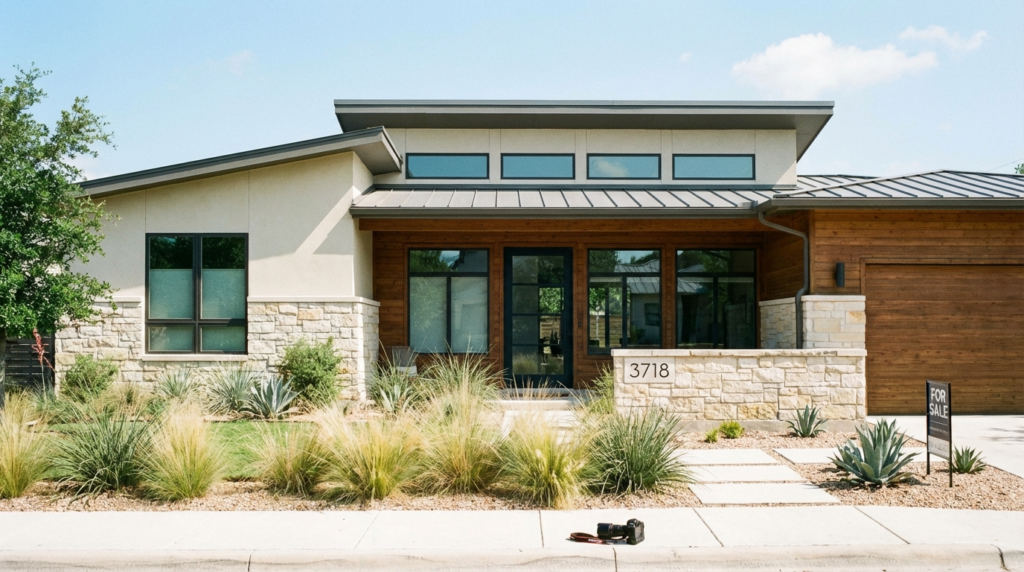
How do you write a winning offer in New Braunfels without overpaying—or skipping the protections that keep you safe?
Quick Answer
In 2026, the best New Braunfels offer strategy is to show the seller you’re the most reliable path to closing: strong financing, clean timelines, and smart Texas-contract terms—while still protecting yourself with an option period and a fast inspection plan. The goal isn’t “win at any cost.” It’s win the right house with disciplined numbers and a contract that doesn’t blow up at day 12.
The Complete Picture
Most buyers think a “winning offer” is about one thing: price. In reality, sellers (and listing agents) are ranking risk. They’re asking, “Which buyer is most likely to close on time, without drama, without a renegotiation spiral, and without financing surprises?” If your offer answers that question better than everyone else’s, you’ll win more often—even when you’re not the highest number on the page.
Here’s what makes New Braunfels and the surrounding Hill Country a little different: it’s a market of pockets. A move-in-ready home in a highly desirable area can still get multiple offers quickly, while a similar-priced home down the road might sit long enough to create leverage. In the San Antonio–New Braunfels CBSA, Realtor.com’s median days-on-market metric (published via FRED) has been elevated at points in early 2026, which is a big deal for strategy: time on market changes who has leverage and what terms sellers will accept.
So when I coach buyers, I’m not trying to turn you into an aggressive negotiator. I’m trying to make you a prepared buyer with a clear plan. That means you (1) know your ceiling, (2) know how to compete when competition exists, and (3) know how to protect yourself when the house isn’t as “perfect” as it looks on the first tour.
Key Insights
Let’s break down the offer strategy I use with serious buyers—financing, touring, contracts, inspections, and the “seller psychology” pieces that actually change outcomes in New Braunfels.
-
Build certainty before you shop (not after you fall in love)
A pre-approval is not the same thing as a fully underwritten buyer file. The more your lender has verified up front, the fewer last-minute surprises you have when appraisal, title, and underwriting collide. In practical terms, a strong lender + clean paperwork lets you offer a shorter financing timeline and reduce the seller’s fear of a late denial. Mini-example: if two offers are close in price, the one with cleaner financing language and faster timelines often wins because it “feels” safer—especially if the seller is already under contract on their next home.
-
Your offer starts during the tour: document what matters
Touring is not just “do we like it?” It’s “can we defend this value?” On tour day, I’m looking for clues that will matter later: roof age signs, foundation hints (doors that stick, major cracks), drainage patterns, HVAC condition, and anything that could create appraisal or insurance friction. Mini-example: if a home backs to a drainage easement or has obvious grading issues, we don’t just shrug—we decide whether that risk should change price, repairs, or whether we pass entirely.
-
Use the Texas option period strategically (don’t treat it like a weakness)
Texas contracts commonly include a termination option period that gives buyers an unrestricted window to terminate for any reason—this is the due-diligence runway where inspections happen and leverage is real. The Texas Real Estate Research Center (TRERC) emphasizes that skipping the option period is generally a bad idea because it increases post-close risk and can put buyers in a corner if major issues show up later. Mini-example: if a buyer waives the option period to “win,” then discovers a costly plumbing issue, they may have far fewer clean exits. The smarter play is usually a shorter, well-planned option period with inspections scheduled immediately.
-
Offer terms can beat price (especially when the seller has a timeline)
Price is only one lever. Terms can be a bigger lever. Closing date, leaseback, earnest money strength, option fee strength, and how “clean” your addenda are can make your offer feel simple to accept. Mini-example: a seller who needs time to move might value a clean leaseback more than a slightly higher price—because the value to them is certainty and less stress, not just dollars.
-
Appraisal and payment strategy should match the pocket of the market
In 2026, rates still make payment math the center of gravity (Freddie Mac’s PMMS releases have hovered around the ~6% range at points in spring). That means credits, buydowns, and closing costs can matter more than “winning” by $5,000. Mini-example: in a segment where homes are sitting, a seller credit that lowers your cash-to-close or helps with a buydown can be more valuable than grinding the price down an extra notch—especially if the home appraises cleanly and you’re optimizing for monthly payment.
Market Reality
Here’s the truth about writing offers in New Braunfels right now: you can’t use one template for every house. Some listings are still “Saturday morning and gone by Sunday night.” Others are the opposite—stale listing, awkward condition, competing with new-build incentives, and the seller is quietly hoping someone bails them out at their original number. Your strategy should change based on which situation you’re in.
When the home is fresh and clearly desirable, you compete by tightening your execution: clean pre-approval, fast option/inspection plan, strong earnest money, and terms that don’t create uncertainty. You also compete by being decisive: touring early, reviewing disclosures quickly, and making a complete offer package (not a half-offer followed by a dozen follow-up questions).
When the home has time on market, you compete differently: you use data and alternatives. You look at sold comps, active competition, and you compare the deal to new construction incentives in nearby communities. That’s where negotiation gets easier—because sellers can see the problem. If their home has been available while other homes have moved, it’s usually pricing, condition, or terms.
And don’t ignore the paperwork side of “market reality.” Contract forms and notice rules evolve. TREC’s published change notes for the One to Four Family Residential Contract (Resale) highlight ongoing clarifications around notices and timing. Translation for buyers: your deadlines matter. Your delivery method matters. And your strategy has to include a simple discipline: track dates and act early, not on the last afternoon of the option period.
Action Steps
- Get lender-verified, not just “pre-approved.” Ask your lender what they have actually reviewed (income, assets, credit, documentation) and whether they can move toward underwriting early. Your offer is only as strong as your loan file.
- Decide your ceiling before you tour the “one.” Know the payment you’re comfortable with, your cash-to-close limit, and the tradeoffs you’ll accept (rate vs. price vs. credit). This prevents emotional overbidding.
- Tour like an evaluator. Take notes on systems, layout risks, exterior drainage, roof condition indicators, and neighborhood noise/traffic patterns. If you want a second set of eyes, this is where having a local agent matters.
- Write a clean contract with a fast due-diligence plan. Use an option period that you can actually execute: schedule inspections immediately, plan specialty scopes if needed, and set a decision day before the deadline so you’re not negotiating at 4:45 p.m.
- Use terms to solve the seller’s problem. If the seller needs time, consider a closing date that fits, a leaseback, or other clean solutions—without taking on risk you don’t understand.
- Optimize for the outcome you want: price, payment, or certainty. In some pockets, you compete on price. In others, you win by being the easiest buyer to close with. And in many cases, a credit/buydown conversation beats a pure price fight.
Frequently Asked Questions
- What is the option period in a Texas home contract? It’s a negotiated window after the contract’s effective date where the buyer can terminate for any reason (by giving notice on time), typically with earnest money returned per the contract terms. It’s the core due-diligence window where inspections and repair negotiations usually happen.
- Should I waive the option period to win a multiple-offer situation? Most buyers shouldn’t. A shorter option period with inspections scheduled immediately is usually a safer way to compete. Waiving protections can turn a “win” into an expensive surprise after closing.
- How do I compete with cash buyers in New Braunfels? You compete on certainty and speed: strong lender, tight timelines, clean documents, and terms that reduce seller friction (like a flexible closing date). Sometimes a slightly higher earnest money deposit and a well-packaged offer also helps show seriousness.
- How early will I see my final loan numbers before closing? Federal rules require you to receive a Closing Disclosure at least three business days before closing. Use that time to compare it to your Loan Estimate, verify cash-to-close, and ask questions early (CFPB guidance is excellent here).
- What’s the biggest mistake buyers make right now? Treating the whole New Braunfels market like one big headline. Strategy should change by neighborhood, price point, and condition. The best offers are “right-sized” to the pocket you’re buying in—without ignoring due diligence.
Closing
If you want, I’ll help you turn this into a simple, repeatable plan: lender strategy, tour checklist, offer structure, and a timeline that keeps you protected while still competing. That’s what I do every week with motivated buyers who want to make a smart move in New Braunfels and the Hill Country.
When you’re ready, reach out to Cody Posey Real Estate and I’ll help you map the cleanest path to closing for your specific price point and neighborhood.
Ready to talk strategy? Call Cody Posey Real Estate at 830.360.5569.
Sources: Texas Real Estate Research Center (TRERC) — Option Period Basics; Consumer Financial Protection Bureau (CFPB) — Review documents before closing; FRED (Realtor.com) — Median Days on Market, San Antonio–New Braunfels CBSA; Freddie Mac PMMS press release (Mar 5, 2026); TREC — Contract form update notes (TREC 20-18).
Internal links: New Braunfels real estate; New vs. resale in New Braunfels; talk with Cody Posey Real Estate.